Stereotypes

Hey guys. What do you think south african people look like? I drew something to show you how I picture them.
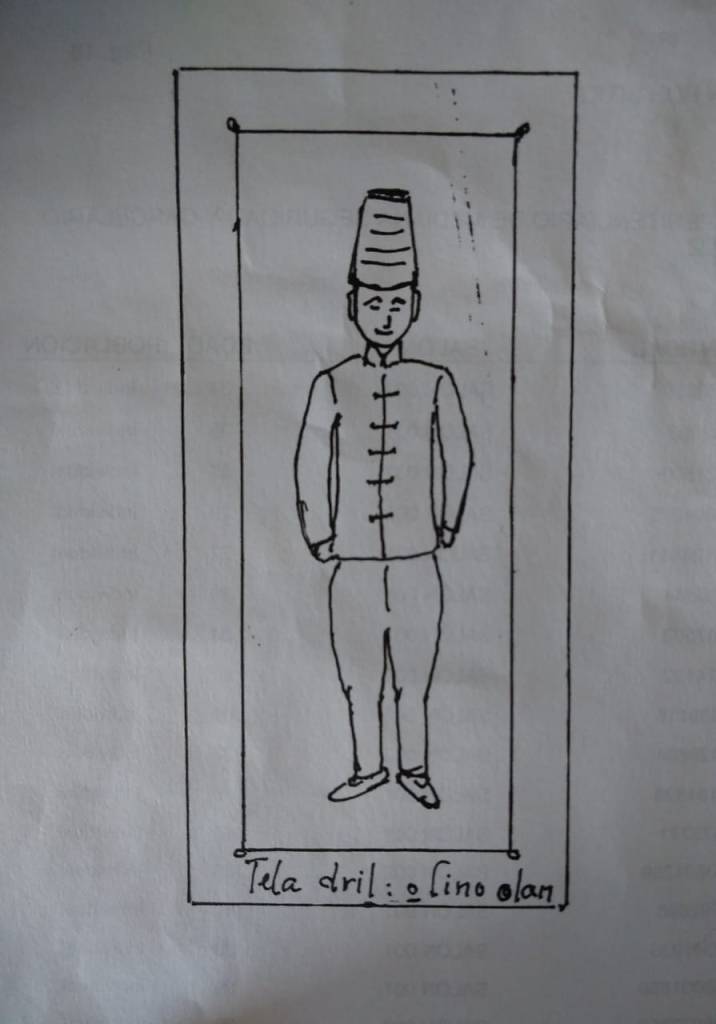
As you can see, the drawing has no color. But I really pictured the man as a black person, due to the fact they live in Africa. I’ve imagined his clothes very tribal-like, maybe because in movies and other visual representations african people always wear extravagant clothes, full of color and weird hats.

As I researched more about this culture I found out that, although most of the population is black, there are actually white South African. They’re all really modern, some of them still have old traditions but in the day-to-day life they look like any of us.

I think the image about them that movies had created on us really affected my perception. I used think about them as people who couldn’t go to school, who didn’t care about writing poetry or novels. But as I started to get more involved with their culture, I’ve realized how many stereotypes I believed are not true.

As a famous writer from Africa says,

“The single story creates stereotypes, and the problem with stereotypes is not that they are untrue, but that they are incomplete. They make one story become the only story.”

Chimamanda Ngozi Adichie

South African Subcultures!

So, researching and digging the internet I found something rather exciting: pop cultures in South Africa and tribes!

Kom Ons Braai
It’s so popular, that most of the country recognises Heritage Day as National Braai Day and they all organise big gatherings where they can stand around the fire and cook meat.
The subculture of braaing started out mostly between the white Afrikaners. From there is spread throughout all cultures and now is more of a social phenomenon.
Smarteez
The Smarteez are a small youth group of fashion designers who dress in bright and mismatching colours and patterns to make their statement. Their belief is that they’re born to be free and so they will express that by wearing what they want and drawing attention to themselves in the meantime.

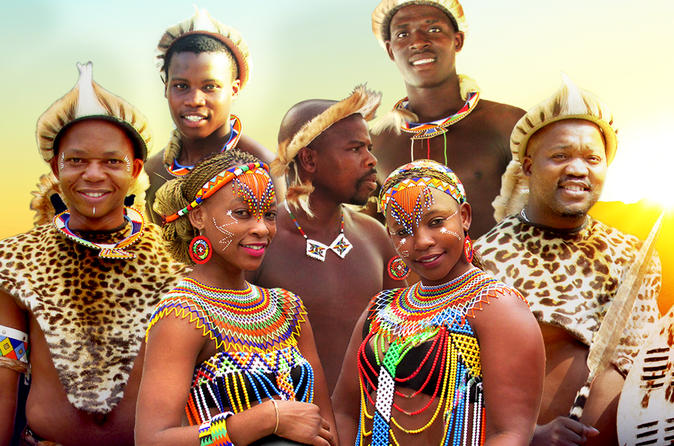
ZULU: A TRIBE

This is the largest ethnic group in South Africa, with over 10 million people. They refer to themselves as ‘the people of the heavens’. The speak IsiZulu, which is South Africa’s most widely spoken official language. It is a tonal language understood by people from the Cape to Zimbabwe and is characterized by many «clicks»

Traditional Zulu religion was based on ancestor worship and on beliefs in a creator god, witches, and sorcerers. Modern Zulu Christianity has been marked by the growth of independent or separatist churches under prophets, some of great wealth and influence.

They live mainly in the province of KwaZulu-Natal.

Finally, I found an interesting video about the subculture Smarteez. I’ll lo leave you to it. Hope you enjoyed this amazing trip to South Africa!

Linear-active or multi-active?

It is important to say that the south african culture doesn’t fit 100% in a category from the Lewis Model. As we can see on the image below, it is right in the middle between linear-active groups and multi-active groups. This means we have to analyze both categories.

Linear-Actives are task-oriented, highly-organized planners, who complete action chains by doing one thing at a time, preferably in accordance with a linear agenda.

On the other hand, Multi-Actives are emotional, loquacious and impulsive people who attach great importance to family, feelings, relationships, people in general. They like to do many things at the same time and are poor followers of agendas.

South Africa is located in the same groupo as european countries and United States. This may be to the fact that their culture has been highly westernized. It still reflects the power and influence that its previous colonies had over it.

Therefore, south african culture has individuals that are organized planners who may be impulsive once in a while. For them, family is really important but they don’t tend to be too emotional when it comes to achieving a goal.

A person from South Africa that came to Barranquilla would fit well because of the significance that family has for both cultures. However, if this person came to study and would have to do a group project would probably face some issues. For instance, Colombia is a multi-active nation, which means we are generally poor followers of agendas so that would be a problem. On the other hand, the fact that South Africans are such good decision makers according to the Lewis Model, would improve the group’s performance.

If this person is someone that does things one after the other could face limitations as colombians often do many things at the same time. This could be a problem in a group project or even in the classroom, as the techniques used by the teachers are probably influenced by this mindset.

In conclusion, it wouldn’t be terrible, both cultures are not that different. But styles in terms of action might be a problem. No doubt it is something that can be talked over!

COLOMBIA VS SOUTH AFRICA

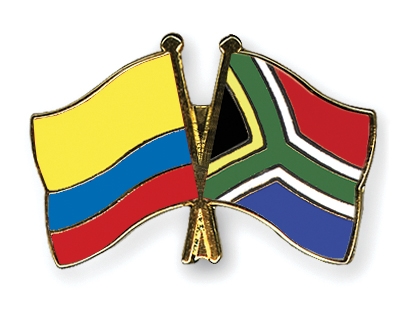
Hello there! Today we’ll explore South Africa in relation to Hofstede’s dimensions, in order to know what they’re like and if they have anything in common with colombian culture!

HOFSTEDE’S DIMENSIONS

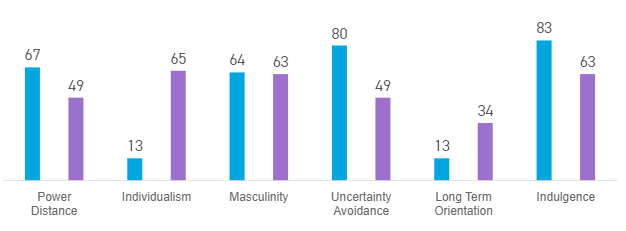
According to Hofstede Insights the score of over half of the cultural dimensions regarding Colombia and South Africa is similar. We’ll check each dimension to figure out similarities and differences.

Hofstede’s cultural dimensions. South Africa (purple) and Colombia (blue).
  1. Power Distance: according to Hofstede, this dimension deals with the fact that all individuals in societies are not equal – it expresses the attitude of the culture towards these inequalities amongst us. Colombia scored higher than South Africa, meaning that colombians often feel inequalities are just a fact of life. South african accept less the distribution of power. Both cultures reflect a hierarchy structure with concentrated power.
  2. Individualism: this dimension has to do with whether people’s self-image is defined in terms of “I” or “We”. According to the chart, Colombia is rather a collective nation. People in here will mostly belong in groups that take care of them in exchange for loyalty. On the other hand, South Africa is a country with a high level of individualism, meaning family is a key element in their culture. This actually has to do with the fact that tribes, before considered families, were the begninning of this society.
  3. Masculinity: both countries scored a high level of masculinity, meaning that their cultures are based on competition, achievement and success. This probably has to do with the gender inequality that characterizes both societies. Success is given in material things. We see that both countries thrive on economic growth and, on the individual level, seek a life that’s full of cars, houses and other people’s approval to find happiness.
  4. Uncertainty avoidance: has to do with the way that a society deals with the fact that the future can never be known. Colombia scored high, which means colombians are not comfortable with future ambiguity. This may be due to the strong religious roots that the country has, and so they seek for an answer to everything. They care about consequences and punishment and therefore have a lot of rules. On the contrary, South Africa shows, according to its score, a more relaxed attitude in which practice counts more than principles and deviance from the norm is more easily tolerated.
  5. Long term orientation: both countries scored low on this dimension, which means they have to maintain links with their past as they face the challenges of the future. Full of time-honored traditions, Colombia is one of the most conservative cultures there is. Change is not well accepted, which may be due to the armed conflict which showed the violence that came with the alternative. South Africa tends to be more pragmatic than Colombia, but maintains doubt towards change.
  6. Indulgence: This dimension is defined as the extent to which people try to control their desires and impulses, based on the way they were raised. Both countries scored high, meaning they have week control. The colombian mothers are rather indulgent toward their children: they let them play and have fun as they please. As a consequence, this society has a tendency towards optimism and leisure time plays an important role for them. This also applies to south african culture.

Colombian culture is very similar to a lot of other Latin American countries, with a few special elements that make it unique. Looking at Colombian history, for example, the Spanish colonial era has left a lasting influence throughout the country, with a high rate of Roman Catholics in Colombian society. The Spanish decimated the indigenous population here, yet many elements live on in Colombian customs, music, and language.

On the other hand, South Africa has been famously referred to as the rainbow nation because it is made up of so many diverse cultures and religions. Contained within South Africa’s borders are Zulu, Xhosa, Pedi, Tswana, Ndebele, Khoisan, Hindu, Muslim, and Afrikaner people to name but a few.

South Africa and Gender

To know more about this amazing culture, I’ve created this tiny piece on South Africa’s perception of gender and how it can be compared to Colombia’s.

Gender roles are usually based on several factors such as how the culture has traditionally enacted gender roles through formal (law, policies) and informal institutions (religion, individual and collective beliefs).

In South Africa, many racial and ethnic groups have maintained traditional gender roles, and most are very similar to the ones in Colombia, in which women usually have less power than men. 

Although nowadays men have come to fulfill many women roles, the expectations towards women are higher both in South Africa and Colombia. For instance, women are now expected to work outside, but not stop their domestic job. They get home to cook, clean, get the children ready, among other things.

Also, women make up just over half of the population in South Africa and Colombia, but when one examines the population in the poorest areas like rural areas and informal settlements there are always many more women than men.  Over half of all the women that live in these rural areas live in extreme poverty with single family households more common. In Colombia, the so called «madres cabeza de hogar» are augmenting. Both here and in South Africa, access to land and support for small-scale farming is a major problem.

One of the differences between South African and Colombian women, is that the latter achieve a higher education level. Most South African women have grade 7 or less education and many no schooling at all.

Another thing that has impacted South African women is Apartheid. The visible discrimination against black people in this country has caused an even worse condition for black women. In Colombia, there is discrimination but not as radical as in this african country. The Apartheid is still felt in every sphere of life: politics, economy, law and social life. Seeking for a job in South Africa being a woman is harder than in Colombia.

In conclusion, gender roles are still a problem for women in South Africa and in Colombia. In both country, they represent more obstacles in the day-to-day life and also in the long run for women. There are differences, but one can say that men still hold the power in both countries, as women are still considered the «weak gender».

Diseña un sitio como este con WordPress.com
Comenzar